
Contents
- 🌎 Origins & History
- ⚖️ Philosophical & Religious Perspectives
- 📊 Key Facts & Statistics
- 👥 Key Figures & Organizations
- 🌍 Cultural Impact & Influence
- ⚡ Current State & Latest Developments
- 🤔 Controversies & Debates
- 🔮 Future Outlook & Predictions
- 💡 Practical Applications
- 📚 Related Topics & Deeper Reading
- References
Overview
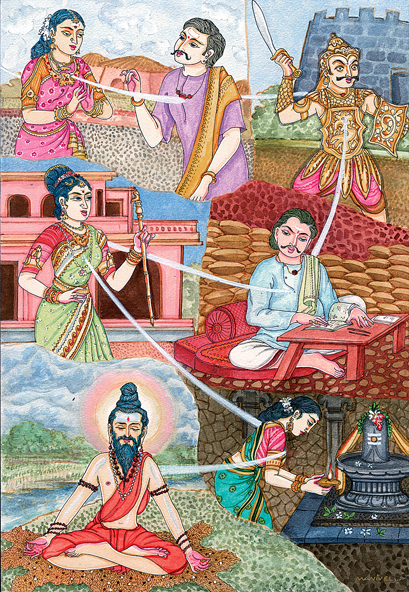
Reincarnation, also known as rebirth or transmigration, is the philosophical or religious concept that the nonmaterial essence of a living being begins a new lifespan in a different physical form or body after biological death. This concept is a central tenet of Indian religions such as Hinduism, Buddhism, Jainism, and Sikhism, and also appears in various forms in Judaism, pagan religions, and some Indigenous cultures. With a rich history, reincarnation has been explored in the works of ancient Greek philosophers like Plato and Pythagoras, and continues to be a topic of interest in modern spirituality and psychology. The concept has also been influential in shaping Western esotericism, with notable figures like Helena Blavatsky and Rudolf Steiner drawing on Eastern spiritual traditions to develop their own teachings on reincarnation.
🌎 Origins & History
In Hinduism, the concept of karma is closely tied to reincarnation, with an individual's actions in one life determining their circumstances in the next. The concept of reincarnation has also been influenced by other cultures, such as the ancient Greeks, who believed in the concept of metempsychosis, and the Indigenous cultures of Australia, who believe in the concept of dreamtime.
⚖️ Philosophical & Religious Perspectives
The philosophical and religious perspectives on reincarnation vary widely, with some traditions viewing it as a means of spiritual growth and others seeing it as a form of punishment or reward. In Buddhism, for example, reincarnation is seen as an opportunity for spiritual growth and enlightenment, while in some Indigenous cultures, it is believed that the soul returns to the spirit world after death. The concept of reincarnation has also been influential in Western esotericism, with notable figures like Helena Blavatsky and Rudolf Steiner drawing on Eastern spiritual traditions to develop their own teachings on reincarnation.
📊 Key Facts & Statistics
Gautama Buddha taught that reincarnation was an opportunity for spiritual growth and enlightenment, and Ramana Maharshi believed that the ultimate goal of reincarnation was to achieve liberation from the cycle of birth and death. Other notable figures include Paramahansa Yogananda, who wrote extensively on the topic of reincarnation, and Deepak Chopra, who has explored the concept of reincarnation in the context of modern spirituality.
👥 Key Figures & Organizations
Reincarnation has had a significant cultural impact, influencing art, literature, and music throughout history. The concept has been explored in the works of authors like Hermann Hesse and James Hilton, and has been a theme in films like Groundhog Day and Cloud Atlas. In music, the concept of reincarnation has been explored by artists like The Beatles and Bob Dylan.
🌍 Cultural Impact & Influence
Today, reincarnation remains a topic of interest in modern spirituality and psychology, with many people exploring the concept as a means of personal growth and self-discovery. The concept has also been influential in shaping Western esotericism, with the New Age movement and the Human Potential movement being two notable examples of spiritual movements that have explored the concept of reincarnation. There is a growing interest in the concept of reincarnation in the context of near-death experiences and past-life regression.
⚡ Current State & Latest Developments
The concept of reincarnation remains a topic of controversy and debate, with some critics arguing that it is a form of superstition or fantasy. However, proponents of reincarnation argue that the concept is supported by a wide range of evidence, including near-death experiences, past-life regression, and the testimony of individuals who claim to have experienced reincarnation.
🤔 Controversies & Debates
Looking to the future, it is likely that the concept of reincarnation will continue to evolve and adapt to changing cultural and spiritual contexts. As people become increasingly interested in spirituality and personal growth, the concept of reincarnation is likely to remain a topic of interest and exploration.
🔮 Future Outlook & Predictions
In practical terms, the concept of reincarnation can be applied in a variety of ways, including through meditation, yoga, and other spiritual practices. The concept can also be used as a framework for personal growth and self-discovery, with individuals using the idea of reincarnation to reflect on their past experiences and to plan for their future.
💡 Practical Applications
Related topics to reincarnation include karma, rebirth, transmigration, and spirituality. Deeper reading on the topic can be found in the works of authors like Paramahansa Yogananda and Deepak Chopra, who have written extensively on the topic of reincarnation. Other recommended readings include the Bhagavad Gita and the Upanishads, which explore the concept of reincarnation in the context of Hinduism.
Key Facts
- Category
- theology
- Type
- topic